Keeping a reliable record
Most irreversible losses in monumental horology do not happen during dramatic disasters; they occur quietly between custodians. A dedicated volunteer who wound the clock for thirty years retires without writing down why an auxiliary counterweight was tied to the fly arm, or a contractor replaces a broken rope without recording its diameter. Within five years, nobody left in the building knows what is original and what was improvised.
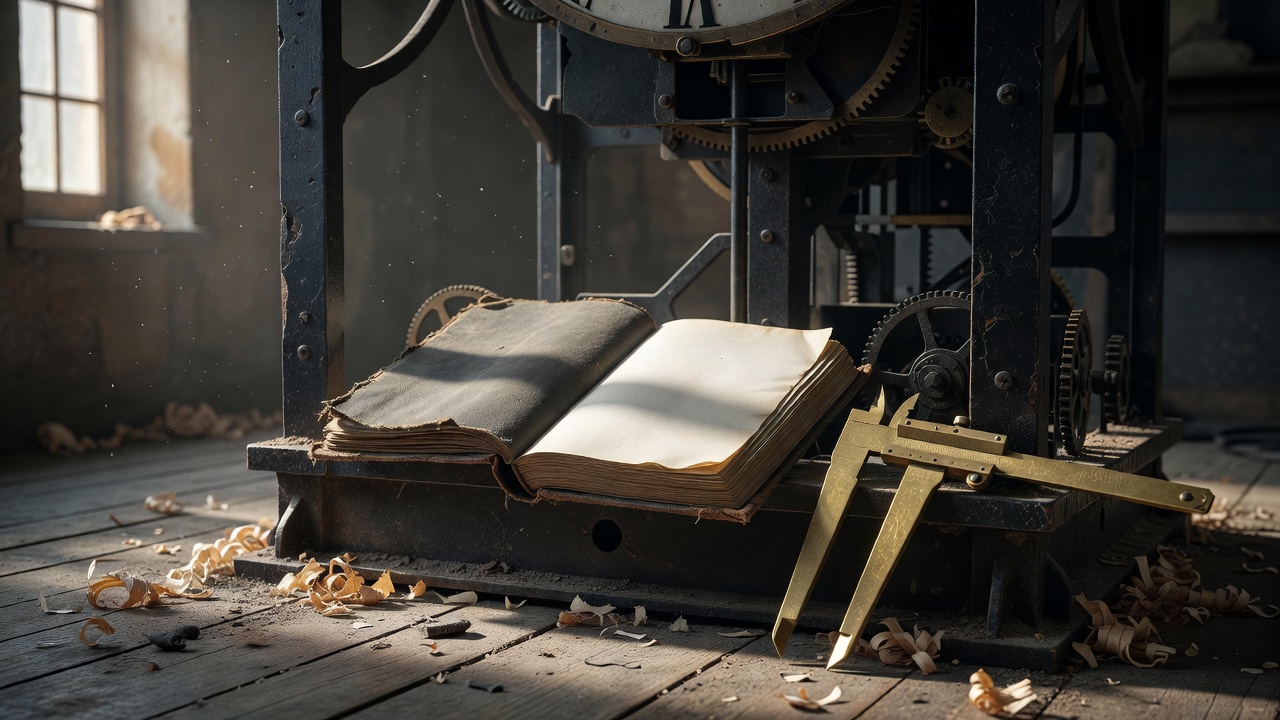
Anatomy of a clock-chamber dossier
Consistent with European conservation documentation standards such as EN 16095, every monumental clock benefits from a two-tier record: a permanent physical ledger stored near the movement and a digital duplicate lodged with the building’s archive. Neither needs elaborate software; plain archival paper, dated photographs, and clear serial descriptions outlast proprietary file formats.
-
Identification and provenance sheet Transcribe all stamped plates, foundry marks, painted dial signatures, and known installation dates alongside dimensional sketches of frame and pendulum length.
-
Timekeeping and rate register Record weekly gain or loss in seconds relative to a reliable reference, noting ambient temperature and weather events that coincide with sudden rate shifts.
-
Intervention and lubrication log Specify exact lubricants applied (such as heavy clock oil for slow great-wheel pivots versus light synthetic oil for escapement pallets), avoiding vague entries like “oiled throughout”.
-
Cable, rope, and safety inspection Log annual visual checks of wire-rope strands for broken wires near barrel clips and verify that wooden or masonry weight chutes remain dry and clear of debris.
Protecting the clock room from tower climate
In historic buildings — from timber-framed guildhalls to coastal stone campaniles — the clock chamber often sits directly below open belfry louvres. Wind-driven rain, pigeon droppings, and lime-mortar dust drift down through trapdoors and settle directly onto oiled pinions. Enclosing the movement inside a ventilated glazed timber case reduces dust deposition dramatically without sealing moisture inside.
Equally important is avoiding aggressive heating. Installing an unbuffered electric space heater inside a cold masonry tower drives relative humidity into wild daily swings, pulling condensation onto massive cold iron wheels each time the heater clicks off. Passive ventilation paired with intact roof flashings and bird-mesh screening behind tower louvres produces far steadier preservation conditions.
Preparing the next keeper
Just as Jean-Baptiste Schwilgué left exhaustive mechanical notebooks for the astronomical clock of Strasbourg Cathedral, ordinary civic and parish clocks deserve clear operating instructions written in plain language. Every custodian handover should walk through safe stopping procedures: how to arrest the pendulum without bending its suspension spring, how to disengage striking before bell ringing or tower scaffolding work, and whom to call if a weight line jams in its chute.
When routine stewardship relies on observation and transparent documentation rather than guesswork, monumental clocks remain living witnesses to regional craftsmanship for another century without sacrificing their historical integrity. Readers seeking concise answers to specific day-to-day dilemmas can consult Clock-room uncertainties.